
#1 - Use Your Judgement
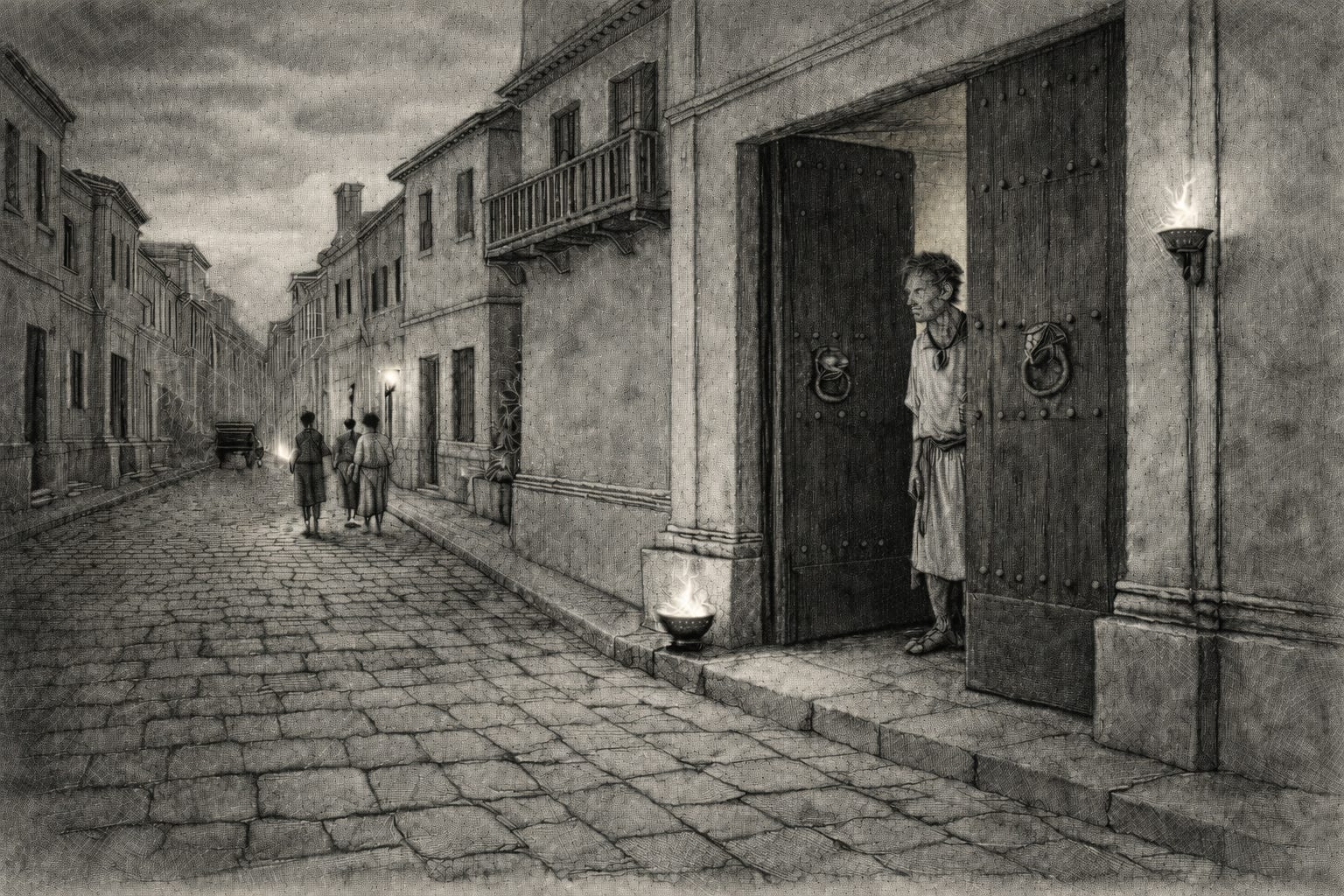
The hinges wanted oil. Tiro ran his thumb along the iron pin where it entered the upper pivot, feeling the grit that had worked itself into the bronze housing—three days since he’d last serviced them, perhaps four. The door had been opening more frequently tonight—over the last hour, perhaps eight or nine people had crossed his threshold, all arriving with the same quiet purpose. All admitted, waiting now in the atrium behind him, their voices a low murmur that didn’t carry to the street.
Gaius Licinius had arrived first, a retired military tribune who lived three streets over, then Publius Metellus and his wife, who had made money in the grain trade. A physician Tiro recognized from the Street of the Saddlemakers. Two sisters, patrician by their bearing, who’d given no names. Others. All dressed as if for a modest dinner gathering: winter cloaks, good wool, nothing that would draw attention. No symbols. Nothing to mark them, though Tiro knew what they were.
Claudia had appeared after the second arrival. She had crossed the atrium with the controlled grace of someone raised in a household of standing, stopping where lamplight from the interior met the last blue of dusk.
“Tiro,” she’d said. Her voice quiet, carrying authority without volume. “If anyone asks tonight, we’re observing mourning rites for my husband’s father. Do you understand?”
“Yes, domina.”
“Admit them in pairs. Not all at once.” She’d glanced back at the two guests waiting in the atrium. “Let them wait a moment between arrivals. It should look... ordinary.”
“Yes, domina.”
She’d held his eyes a moment longer, the same question in her face that had been in the first guests’ faces—can we trust you, do you understand what’s at stake—and then she’d turned to greet the waiting guests, guiding them toward the depths of the home.
Tiro followed her instructions. Admitted them in pairs when they arrived together, made the others wait when they came too close together. He watched them cross his threshold one by one, noticing the care they took to appear unremarkable. To a watching neighbor, it would look like Gaius Septimius Varro was hosting a modest evening gathering. Nothing unusual in that. But Tiro had stood at this threshold for nearly eighteen years, had admitted hundreds of guests to hundreds of gatherings, and he knew the difference between a dinner party and something else.
In winter the household typically rose late and retired early, requiring fewer openings of the door. Tonight the hinges had worked constantly, and now they showed it. Rust took hold quickly without care—he’d learned that from old Sergius, who’d beaten him for letting a gate seize in winter, then made him rebuild it in the courtyard until his fingers bled. A doorkeeper’s competence lived in anticipation, not just repair.
He worked new oil into the housing with his smallest finger, feeling the metal warm with friction. The lagena of lamp oil stood in its usual niche, next to the supply of wicks and the bundle of replacement bars—everything in its place. The threshold stone showed the hollow his feet had worn over eighteen years, standing in the same spot to receive visitors, to evaluate their purpose, to grant or deny entry according to instructions and his own sense of whether those instructions applied to this particular caller at this particular hour.
Gaius Septimius Varro’s footsteps crossed the atrium behind him. Tiro recognized the gait without turning—heavier in the evening, the day’s weight settling into the legs. Varro stopped a few paces from the door.
“Is the door secure?” Varro asked.
“Yes, domine.” Tiro straightened from the hinge work, conscious of the oil on his hands.
“I’ll be in the secondary triclinium. With our guests.” Varro’s eyes moved to the street beyond the threshold, then back.
“Yes, domine.”
“If anyone calls—” Varro stopped. The silence extended until it became its own statement. “Use your judgment.”
Tiro felt the words rearrange themselves in his mind, trying to find an interpretation that didn’t point toward the thing neither of them would name—but being told to use his judgment meant something had changed. His standing instructions—admit family, defer to neighbors of equal status, refer commercial callers to morning hours, deny beggars after dark—were judgments already made. To be told to use judgment was to be told the instructions might not apply.
“Yes, domine,” he said.
Varro looked at him a moment longer, then turned back toward the interior. His footsteps receded across the atrium’s tiles, the sound swallowed by the guests’ movement as they followed him inward.
He returned to the door and continued his work. The locking bar fit cleanly in its brackets—he’d planed them himself last summer when the wood had swollen—and slid home now with no resistance, no gap. The striker plate for the street-side knocker was loose. He tapped it three times with his knuckle, feeling the give that meant the pins had worked themselves partway out. Common enough in winter, when the bronze contracted with cold.
He fetched new bronze pins from his supply niche, working them into the holes by lamplight. The old pins came out reluctantly, corroded in place by months of rain and cold, but the new ones went in clean, their threads biting into wood that was still sound beneath the surface wear. He tapped each one home with the small mallet he kept for such work, testing the plate after each pin until it sat flush and firm against the door.
Voices had begun in the secondary triclinium now. Not loud, but sound carried differently through a house at night, when commercial traffic had ended and the street lay quiet.
That was the risk. Lucius Aemilius Sabinus, two houses down, had complained last month about noise from Varro’s workshop after dark. Auctus the carpenter had been working late, hammering after proper hours. Varro had apologized, compensating Sabinus with a basket of good oil, and the matter ended. But the peace hadn’t held. Minor disputes accumulated across months—disturbed pigeons, a flooded sewer Varro paid to clear—until Sabinus decided the balance had tipped far enough to justify involving authorities.
The voices in the triclinium grew—not in volume but in number, a liturgical rhythm that didn’t sound like normal dinner conversation. Tiro moved toward the atrium’s center. From there he could hear both the interior and the street. The water clock showed two hours past sunset.
He returned to the threshold and sat in his usual spot, his feet finding the worn hollow. The street was empty. Winter air carried cold up from the river—the smell of sewage and smoke from a thousand hearths.
The knock came at the door’s center, three measured strikes that announced authority.
Tiro lifted the locking bar from its brackets and set it aside. The guests had heard the sound; there was no help for that. He pulled the door inward. Two men stood there in the leather and wool of the night watch, carrying staffs and a shuttered lamp. The older one was familiar from previous rounds, a heavy-faced man with grey in his stubble who always smelled of wine. The younger was new to the district, his face still sharp with attention rather than worn down by tedium.
“Gaius Septimius Varro’s household,” Tiro said, pitching his voice to professional competence without servility. “How may I assist the watch?”
“Complaint of disturbance,” the older vigil said. He leaned on his staff, clearly expecting this to be brief. “Neighbor reports noise after proper hours.”
“I’ve heard no disturbance,” Tiro said—which was true in the way a doorkeeper’s truth worked. He’d heard voices. But voices became disturbance only when they disturbed, and who was to say what constituted disturbance in a private household conducting private business?
The younger vigil shifted his weight, looking past Tiro into the atrium. “Someone’s awake in there.”
“Dominus dines with his household.” Tiro didn’t move from the doorway, didn’t widen the opening. “A small gathering. Family and close friends.”
“At this hour?” The younger one again, his tone carrying conspicuous suspicion, looking for opportunity.
“Dominus meus keeps his own hours.” Tiro felt sweat forming under his tunic despite the cold, his hands wanting to shake, and he locked them against his sides “As is his right as a citizen.”
The older vigil sighed, the sound of a man who wanted to finish his round and find a warm corner and a cup of wine. “We’ll need to verify. Step aside.”
Tiro felt it as his breath caught and held.
Step aside meant letting them pass. Letting them pass meant they’d cross the threshold, move through the atrium, hear what was being said—they wouldn’t understand it, but they’d know it wasn’t normal dinner conversation. Questions. Then problems.
“Of course,” Tiro said. “But may I see your authorization? Dominus requires documentation of official visits.”
He knew it was nonsense. Vigiles needed no authorization beyond their staff. It was the kind of nonsense that sometimes worked because it sounded official and created a procedural step, and those accustomed to procedure often followed it even when they had power to refuse.
Irritation crossed the older vigil’s face. “Our authority comes from the prefect. You know that.”
“Yes, of course.” Tiro bowed his head in acknowledgment. “Forgive me. Dominus has been particular since the incident with the tax assessor last year. I’m required to note all official visits.”
He pulled out the wax tablet he kept for noting callers and made a show of marking it with the stylus—standard procedure, done a hundred times for legitimate callers. But his hand moved too deliberately, the stylus pressing harder than necessary into the wax.
“Decimus Primus,” the older vigil said. “Third cohort, second century. Satisfied?”
“Thank you.” Tiro noted the name. “And your colleague?”
“This is unnecessary,” the younger vigil said, clearly irritated.
From the triclinium, voices rose in what might have been song or prayer, the sound carrying badly through the interior passages, distorted by distance and architecture into something unidentifiable. It rose and fell. A rhythm that wasn’t normal household activity.
Both vigiles heard it. The younger one’s head snapped toward the sound, and the older one’s weight shifted from rest to attention, his grip on his staff tightening.
“What’s that?” the younger vigil said.
“Prayers,” Tiro said. “Dominus’ household observances. He’s very pious.”
“Prayers at this hour?” The younger vigil’s eyes had narrowed, interpreting the rhythm—not the quick petition to household gods before sleep, but something sustained and collective.
“Dominus’ father died three days ago.” The lie came out smooth, the same tone he’d use to announce any household business. “The household observes the proper rites.”
The older vigil shifted his staff from hand to hand. “Three days? That would be the fifth day rites, not evening prayers.”
Tiro felt the correction land. He’d miscalculated, picked a number without thinking through the ritual calendar. “The fifth day, yes. Dominus has been very affected. He extends the observations.”
He heard himself fumble, making it worse. The younger vigil moved suddenly, stepping toward the door’s edge, and Tiro’s body responded before thought could intervene—weight shifting, shoulder turning, position blocking the entrance. Eighteen years of threshold defense, the automatic geometry of doorkeeping.
“Step aside,” the younger vigil said, voice low.
This was the threshold he’d defended against beggars and tax collectors and unwanted callers. Step aside meant they’d cross it. That was the thought: the threshold and his place in it.
The vigil’s hand went to his staff, gripping it like a weapon. “Step. Aside.”
From the triclinium, the voices had stopped—perhaps someone had heard the confrontation at the door. The interior silence was worse than the sound.
The older vigil clamped his hand on his colleague’s shoulder. “Easy.” His eyes moved to Tiro. It was impossible to tell whether they held understanding or weariness. “Get your dominus. We’ll wait here.”
Tiro felt his breath release. “Yes. I’ll fetch him immediately.”
He started to turn toward the atrium when he heard Varro’s voice behind him.
“Tiro.” Calm, carrying authority. “What’s the difficulty?”
Tiro quickly stepped aside, letting Varro’s presence fill the space in a way Tiro never could. He wore his dinner tunic, the good wool with the narrow purple stripe, his face holding mild curiosity, nothing more.
“Vigiles,” the older one said, straightening despite himself in the presence of rank. “We’ve had a complaint of disturbance. Noise after hours.”
“Noise?” Varro’s eyebrows rose. “From my household?”
“That’s what we’re here to verify.”
“I see.” Varro looked past them into the street. “Would this be Sabinus again? We’ve had a number of disagreements. Nothing serious, but he does seem prone to complaint.”
The vigiles exchanged glances, and Tiro saw the recognition pass between them: neighborhood disputes, tedious and rarely worth official involvement. The older one’s irritation seemed to shift toward the neighbor who’d dragged them out in the cold for what was probably nothing.
“We still need to confirm there’s no actual disturbance,” the younger one said, but his certainty had wavered.
“Of course.” Varro gestured toward the interior. “Though I’m afraid you’ve interrupted a household religious observance. We’re observing mourning rites for my late father.”
“Our condolences,” the older vigil said, the formula automatic. “We’ll note the complaint as unfounded.”
“I appreciate your diligence.” Varro’s tone carried dismissal wrapped in courtesy. “These are difficult times. We all must be vigilant.”
The word hung in the air—vigilant—and Tiro saw the older vigil hear it, recognize the subtle mockery, and choose to ignore it. Recognizing it would require confrontation.
The younger vigil was still looking past Varro into the atrium, his jaw tight. “We’ll need to note this for the report.”
“Of course,” Varro said.
The younger vigil pulled the small tablet from his belt and marked it with his stylus. When he looked up, his eyes moved from Varro to Tiro and back. “Gaius Septimius Varro. Equestrian order. This address. Mourning observance.” The scratch of the stylus sounded like a door closing. Tiro could tell it wasn’t just a resolved complaint.
“That’s correct,” Varro said.
“Goodnight, citizen.” The younger vigil’s tone was perfectly professional. He turned and followed his partner down the street.
Tiro stood motionless, watching them retreat—the older vigil’s steps steady and unhurried, the younger one walking faster, his posture rigid. At the corner, before they turned, the younger one looked back. Just for a moment. Then they were gone.
Varro waited beside him, both of them still in the doorway, the cold air moving between them.
“Close it,” Varro said finally.
Tiro pushed the door closed. The hinges moved smoothly on the fresh oil. He lifted the locking bar and set it in its brackets. The wood settled into place with a solid thump.
He turned. Varro was watching him.
The silence extended. Then Varro gave a small nod—acknowledgment or dismissal, impossible to say.
“Return to your post,” Varro said finally.
“Yes, domine.”
Varro turned and crossed the atrium. His footsteps echoed on the tiles, steady, unhurried. Tiro returned to his niche and sat on the stone bench worn smooth by decades of doorkeepers before him.
The voices in the triclinium rose briefly, a murmur of greeting or acknowledgment, then the door closed and the sound cut off. The water clock marked past the fourth hour. He noted the lamp wicks needed trimming and returned to his routine maintenance. He noticed steadiness only when the blade no longer slipped.